Skateboarders of Kigali
“Skateboarding is important for Rwanda because it creates room for dialogue and enables us to participate in creating positive change ourselves.”
Shema, Kigali
As a member of The Concrete Jungle Foundation, Skate South Devon have been able to forge links with local skateboarders in Rwanda. Recently we spoke with Shema, a skateboarder from Kigali – the capital city of Rwanda. Below we share his fascinating story, which touches on the history of skateboarding in Rwanda, the impact skateboarding is having on communities in Kigali and the hopes that Shema and his friends have for the future. It was an honor to talk to Shema – his words are wise, considered, thought-provoking and demonstrate the responsibility felt by skateboarders for their communities. Skate South Devon are currently working with our networks in the UK to support local leadership initiatives with Shema and his group through a partnership approach. We hold a shared belief that the partnership can support both organisations in our parallel missions to improve our local communities.
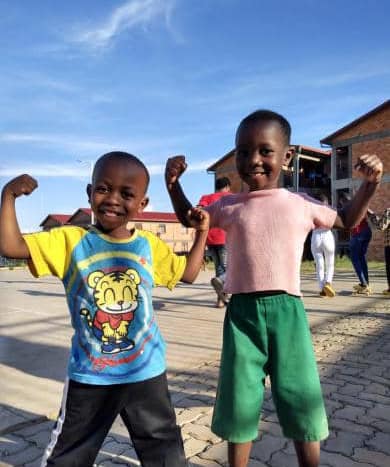
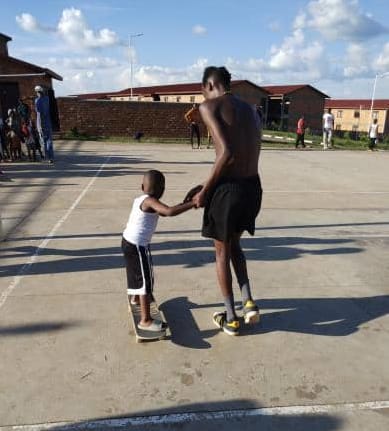
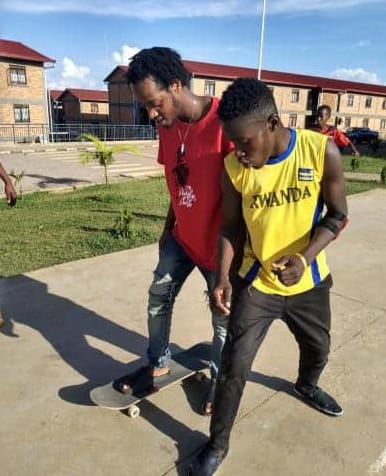
Can you tell us what it is like for young skateboarders living in Rwanda today?
Rwanda has experienced one of the darkest moments in the history of the world, we are talking of the 1994 Genocide. Our parents’ generation inherited a country in utter ruin; with no functioning institutions, scattered peoples and a broken spirit. Consequently, in efforts to rebuild the nation, they were faced with an insurmountable job to breathe life back into the country by providing Rwandan people with basic life necessities such as health insurance, education, and justice. We’ve come a long way since then, our little country has set records on the world stage in areas of security, unity and reconciliation, conservation, cleanliness, the list goes on. But this story the reader can access through any news outlet, we are not here to spread any nationalistic / patriotic campaign, I assure you. We simply want to share with the world the lived experience of Rwandan youths, particularly skateboarders, after three decades that mark the re-birth of our historical, cultural, social-political condition.
How long has skateboarding been a part of Rwandan culture?
Skateboarding culture hasn’t always been around, it is something new that made its way to us through foreign agents – it remains alien, formless and neglected. Up until recent years even we skateboarders couldn’t tell you what it was about; the word community was seldom used and the feeling of it was unknown.
So how did skateboarding arrive in Rwanda then?
All we knew was that a group of international social workers who visited once every year had gifted us with a skatepark and sent board donations occasionally. It was not until COVID hit and the skatepark was demolished that we fully realized what we’d once possessed and lost. Forced to find alternatives we were crushed by the realization that in the midst of the massive agenda for urbanizing Kigali, in sight of towering structures and unbelievable sights, there was nothing – and I mean absolutely nothing outside the conventional in which we could participate and call our own.
How did that affect your friends and fellow skateboarders?
Collectively we felt a void, we felt abandoned, angry and hopeless – but that frustration fueled something in us, something that some of us weren’t even aware existed, the common lot we shared, our desperateness created a bond between us, and for the first time ever we understood what it meant to be part of a community. We decided that nothing truly revolutionary comes easy, if it is worth having then we must fight for it.
What did you do?
What can we do as skateboarders, living in a context like this? Is there anything that we can do? And how can we do it? These questions provoke confrontation with a fundamental decision that we all inevitably make; namely that women and men are either predetermined beings who can only make peace with their fates, or that human beings are an unfinished historical project (though profoundly influenced by different cultural, social, sexual and historical conditioning) who retain a capacity for learning not only to adapt to the world but to intervene, to re-create and transform it.
So how have you mobilized this desire for change?
We formed a youth-run grassroots community advocating for the positive role that skateboarding can play in building sustainable / innovative spaces that actively engage, educate and work with young people. Skateboarding is important for Rwanda because it creates room for dialogue and enables us to participate in creating positive change ourselves.
Can you give some examples of what projects your group is involved in?
For three years we’ve done this through organizing community events such as the annual GoSkateDay, participating in the bi-weekly CarFreeDay, building D.I.Y skate ramps, providing skate equipment to our local team of skateboarders and volunteering. We hope to forge skateboarding into a tool that responds to the social problems of; unemployment, a lack of positive community spaces and fills the gap in educational / social / cultural institutions.


How can skateboarders in the UK help our fellow Rwandan skateboarders?
Living in a landlocked country is not without its limitations, for instance access to skateboarding equipment has always been a challenge for us, we are convinced that one way to overcome this obstacle is through forming partnerships with international skateboarding organizations, professional skateboarders, community enthusiasts and sponsors from whom we can learn the best practices, engage in dialogue and create various opportunities for mutual collaboration and cultural exchange.
Thanks so much Shema for talking to us at Skate South Devon. It’s been a real privilege to be able to have this conversation with you. Thank you!
No, thank you guys for reaching out. I am convinced that skateboarding culture breaks down barriers, literally; geographical, language, or social / cultural. That’s why I’m not really surprised at how easy it was for us to communicate. We have the shared experience of skateboarders and similar virtues in our approach to working with communities.